

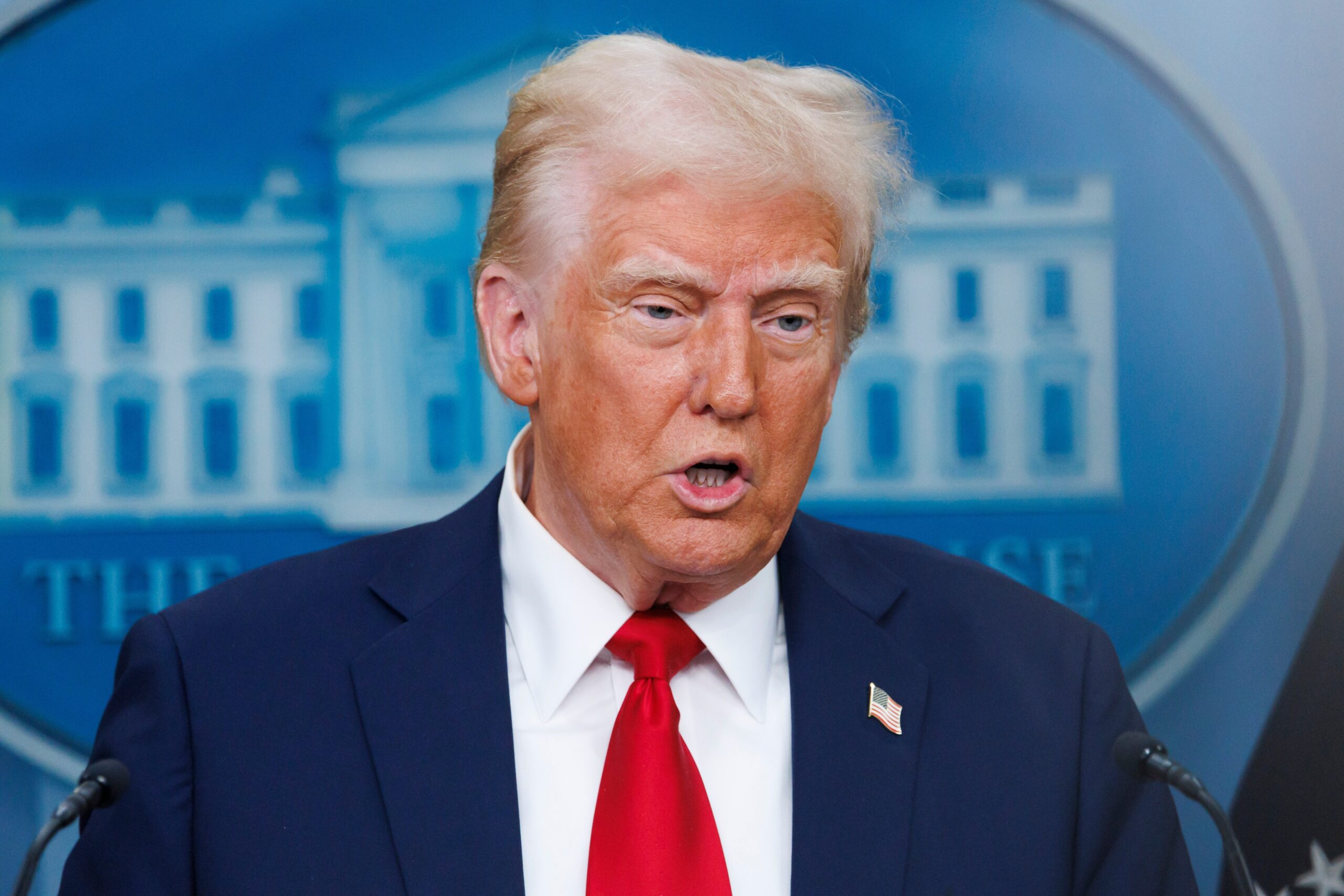
The Kremlin has dismissed suggestions of an imminent summit between Vladimir Putin and Volodymyr Zelensky. At the same time, Donald Trump renewed his call for both leaders to meet and discuss ending the war in Ukraine.
The push for direct negotiations came after Trump met Putin in Alaska last week. On Monday, he hosted Zelensky and seven European leaders at the White House.
Trump admitted the conflict would be tough to resolve. He also warned that Putin might not want to stop the fighting. “We’re going to find out about President Putin in the next couple of weeks,” he said on Tuesday. “It’s possible that he doesn’t want to make a deal.”
Trump suggests leaders should meet without him
Trump said Putin would face “a rough situation” if he avoided talks, though he gave no further detail. He later suggested that Zelensky and Putin might be better off meeting without him. The remarks came in a late-night interview with conservative broadcaster Mark Levin.
The US president added that he would attend such a meeting “if necessary,” but wanted to see how events developed.
Putin told Trump on Monday he was “open” to the idea of direct negotiations with Ukraine. Yet the following day, Foreign Minister Sergei Lavrov played down the suggestion. He said any summit must begin with expert-level talks and advance step by step.
Russian deputy envoy to the UN Dmitry Polyanskiy confirmed no one had refused the idea of talks. But he insisted a summit should not happen “for the sake of a meeting.”
Nato leaders prepare while Russia hints at Moscow
Nato’s military chiefs are set to meet virtually on Wednesday. Britain’s top commander, Admiral Tony Radakin, has travelled to Washington for talks on deploying a reassurance force in Ukraine.
Reports indicated Putin proposed that Zelensky travel to Moscow for discussions. Ukraine was highly unlikely to accept such an offer. Analysts described it as unrealistic and intended only to look constructive.
Trump now appears to have a clearer understanding of the war’s complexity. He recognises the wide gap between Russia’s demands and Ukraine’s position.
His earlier promise of securing a quick ceasefire has faded. He now argues for a permanent peace agreement backed by robust security guarantees for Ukraine.
Zelensky and European leaders have urged him to support such guarantees. They said Ukraine’s sovereignty would rely on them if peace is reached.
Trump rules out US boots on the ground
On Tuesday, Trump said the US could support Europe “by air” if allies committed troops in Ukraine. He ruled out sending American soldiers. He did not specify whether air support meant surveillance, drones, or fighter jets.
Meanwhile, France and the UK are leading a “coalition of the willing.” The group is preparing plans for a reassurance force that could enter Ukraine once the fighting ends.
After a virtual meeting on Tuesday, a Downing Street spokesperson said the coalition would soon meet US officials. Their goal is to secure long-term security guarantees for Kyiv.
Old rivalries weigh heavily on negotiations
After meeting both Putin and Zelensky, Trump said direct talks could bring peace closer. Yet he admitted there was “tremendous bad blood” between the two leaders.
The last meeting between Putin and Zelensky was in 2019. Since then, Russia’s invasion has caused tens of thousands of deaths, widespread destruction, and repeated airstrikes on civilians.
Putin refuses to recognise Zelensky as legitimate. He blames him for Ukraine’s closer ties with the West. For years, he has claimed—without evidence—that Kyiv is ruled by a “neo-Nazi regime.” He insists any ceasefire must include leadership change in Ukraine.
Russia also has little incentive to negotiate while its troops hold the advantage on the battlefield.
Still, Zelensky and European leaders continue to back the idea of a summit. Zelensky said on Monday he was open to “any format” of talks. Europeans have already floated possible venues.
They hope their push for dialogue will encourage Trump to adopt a firmer stance if Putin refuses compromise.
Europe expresses scepticism over Moscow’s motives
European leaders remain more doubtful than Trump about Russia’s intentions. On Tuesday, French President Emmanuel Macron called Putin “a predator, and an ogre at our doorstep.” He voiced strong doubts about Moscow’s willingness to seek peace.
Finnish President Alexander Stubb shared the scepticism. He said Putin was “rarely to be trusted” and doubted a meeting with Zelensky would happen.
More high-level talks are planned in the coming days. European leaders remain uncertain about how far Trump is willing to go in backing their security.
