

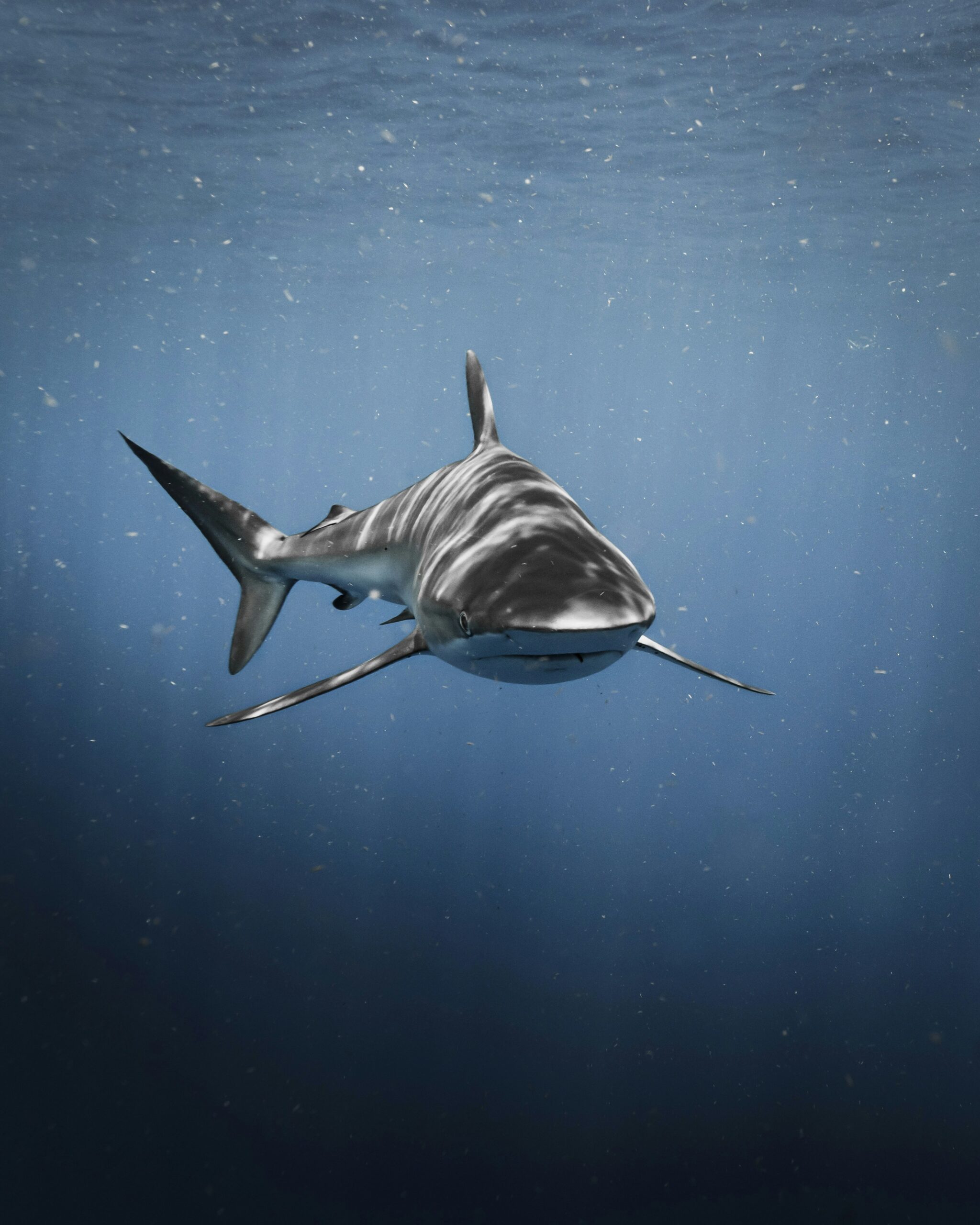
Sharks could face major challenges feeding themselves in the future as ocean acidification threatens to erode their teeth, researchers warn. Shark jaws are lined with multiple rows of teeth, which are constantly replaced as they are lost. However, rapidly acidifying oceans could damage teeth faster than they are replaced, potentially reducing feeding efficiency and impacting marine ecosystem stability.
Ocean acidification occurs as oceans absorb increasing amounts of carbon dioxide, lowering pH levels. Projections suggest that by 2300, ocean pH could drop from around 8.1 to 7.3, with “profound implications for marine organisms,” the study said. To test the effects, researchers placed 60 naturally shed blacktip reef shark teeth in artificial seawater tanks—one at current ocean pH and one at projected future pH. After eight weeks, teeth in the more acidic environment suffered about twice as much damage, including root corrosion and altered serrations, according to lead author Maximilian Baum of Heinrich Heine University.
This dental stress adds to other pressures on shark populations, such as prey shortages from overfishing. While some sharks may adapt by increasing tooth replacement or strengthening damaged teeth, species with fewer teeth or slower replacement rates could be particularly vulnerable. Previous studies have shown acidification harms shells, corals, and mussels, highlighting that even apex predators may not be immune.
Experts say reducing CO₂ emissions is critical to slow acidification. Lisa Whitenack, a shark tooth expert at Allegheny College, noted that damaged teeth may still function effectively, but further research is needed to understand the practical impact on sharks’ ability to hunt and feed.
