

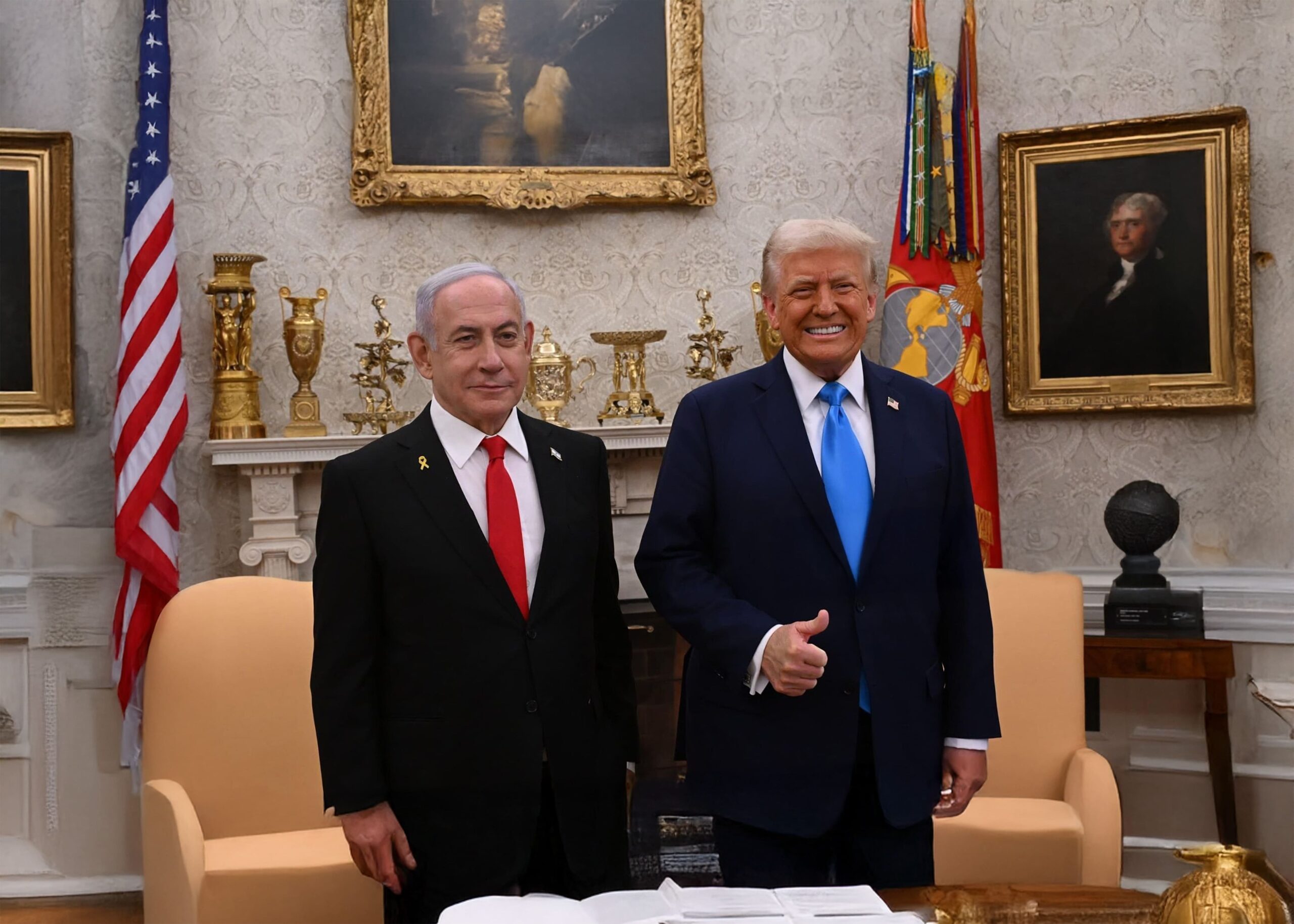
US President Donald Trump and Israeli Prime Minister Benjamin Netanyahu launched a 20-point plan on September 29 to address the Gaza conflict.
Trump developed the proposal with input from Egypt, Qatar, Turkey, and other regional powers.
The plan followed an Israeli strike on Doha, which violated Qatar’s airspace in a failed attempt to target Hamas negotiators.
The incident triggered intense diplomatic backlash, prompting Trump to pressure Israel into accepting an end to hostilities.
By this stage, Israel had achieved its main objectives in Iran, Lebanon, and Gaza, giving Trump political room to act decisively.
On October 8, Trump announced that Israel and Hamas had signed the first phase of the agreement, marking a significant turning point.
First Stage: Ceasefire and Humanitarian Commitments
The plan orders an immediate ceasefire, freezing all frontlines and halting military operations.
Within 72 hours, Hamas must release all Israeli hostages, both living and deceased, without conditions.
Israel must also free 250 prisoners serving life sentences and 1,700 individuals detained since the conflict began.
Humanitarian agencies will monitor compliance to ensure a smooth exchange and prevent renewed violence.
Trump’s administration emphasized that this phase aims to build trust and lay the groundwork for long-term stability.
Second Stage: Disarmament and Security Operations
Negotiations for the second stage will begin once hostages are freed and verified.
This stage mandates the dismantling of Hamas’s military capabilities, including the destruction of tunnels, missile stockpiles, and command centers.
The plan declares Gaza a “de-radicalized, terror-free zone” incapable of threatening neighboring states.
It grants amnesty to Hamas members who renounce violence and allows safe passage into exile for those unwilling to disarm.
A multinational stabilization force, composed of American, Arab, and European personnel, will secure the area and train a new Palestinian police force.
This task force will maintain order, prevent rearmament, and assist in rebuilding civic institutions essential for peace.
Third Stage: Governance, Reconstruction, and Political Transition
The final phase establishes a transitional Palestinian administration led by independent technocrats and monitored by an international authority.
This government will handle public services, rebuild destroyed infrastructure, and coordinate with aid agencies.
The United Nations and the Red Crescent will distribute humanitarian aid to ensure transparency and equal access for Gaza’s population.
The plan encourages displaced Palestinians to return, offering assistance to those committed to rebuilding their communities.
It proposes the gradual recognition of a Palestinian state—conditional on administrative reforms and sustained peace.
The “Board of Peace,” chaired by Trump and including figures such as former UK Prime Minister Tony Blair, will oversee implementation.
This body will supervise governance, enforce accountability, and prevent corruption or militant resurgence.
While the plan acknowledges the Palestinian people’s aspirations for statehood, it stops short of granting formal recognition by the United States.
On September 30, Netanyahu firmly stated that no Palestinian state would be created under the current plan, reaffirming Israel’s stance.
The path ahead remains uncertain, but the agreement signals a cautious start toward ending years of warfare and instability in Gaza.
