

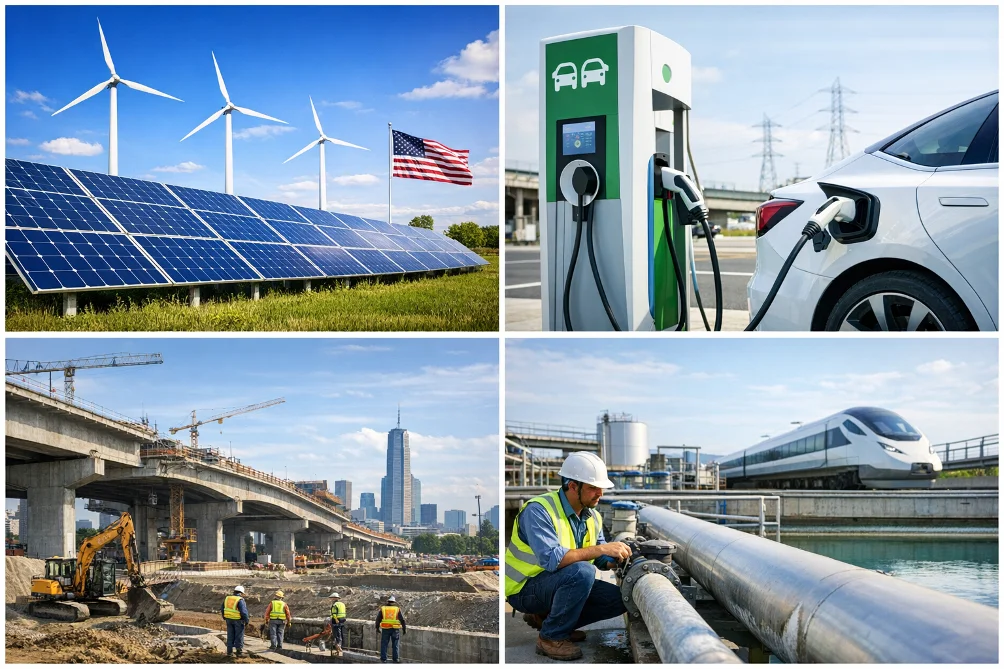
Clean energy support is growing across the United States, with more states investing in renewable energy and sustainable projects. Experts from the sustainability nonprofit Ceres report that investments are picking up even in traditionally conservative states, including Massachusetts, California, and Illinois. This trend shows that clean energy economics can unite regions across political lines.
According to Ceres, the surge in investments is driven by long-term economic benefits, job creation, and increasing demand for renewable energy. Companies and local governments are seeing the potential to reduce costs while supporting sustainability goals. These factors are encouraging more states to adopt policies that favor clean energy growth.
Massachusetts, California, and Illinois have become leading examples of this trend. In these states, renewable energy projects are creating jobs, boosting local economies, and attracting private investment. Lawmakers and business leaders are emphasizing that climate-friendly policies do not have to be partisan. Economic incentives and technological innovation are increasingly the focus.
Investments are not limited to solar and wind power. States are also exploring energy storage, smart grid technology, and energy efficiency programs. Analysts note that such projects are gaining momentum because they provide measurable economic returns and strengthen local infrastructure.
The growing support for clean energy is bridging political divides. Traditionally, energy policy has been a contentious issue, with clear splits between Republican and Democratic priorities. However, the current trend shows that economic benefits of clean energy are appealing across party lines. States are finding common ground in the promise of new jobs, lower energy costs, and long-term environmental gains.
Ceres highlights that public-private partnerships play a key role in this shift. Businesses, investors, and local governments are increasingly collaborating to fund and develop renewable energy projects. These partnerships help overcome financial and technical barriers and speed up the adoption of clean energy solutions.
Experts warn that continued investment is critical. To maintain momentum, states must implement policies that support clean energy development, such as tax incentives, grants, and regulatory frameworks that encourage private investment. Without consistent support, the economic and environmental benefits of renewable energy could slow down.
Public awareness is also increasing. Communities are more informed about the advantages of clean energy, including lower electricity bills, reduced carbon emissions, and improved public health. This growing awareness is helping to build broader political and social support for sustainable energy initiatives.
The expansion of clean energy across multiple states signals a nationwide shift in how energy is produced and consumed. With bipartisan interest growing, renewable energy projects are likely to continue increasing, creating new economic opportunities while addressing climate change. The trend illustrates that sustainability and economic growth can go hand in hand.
Experts conclude that the future of U.S. clean energy depends on continued investment, technological innovation, and collaboration across sectors. As states recognize the economic and environmental advantages, support for renewable energy is expected to expand further, shaping the country’s energy landscape for years to come.
